Laboratory Skincare
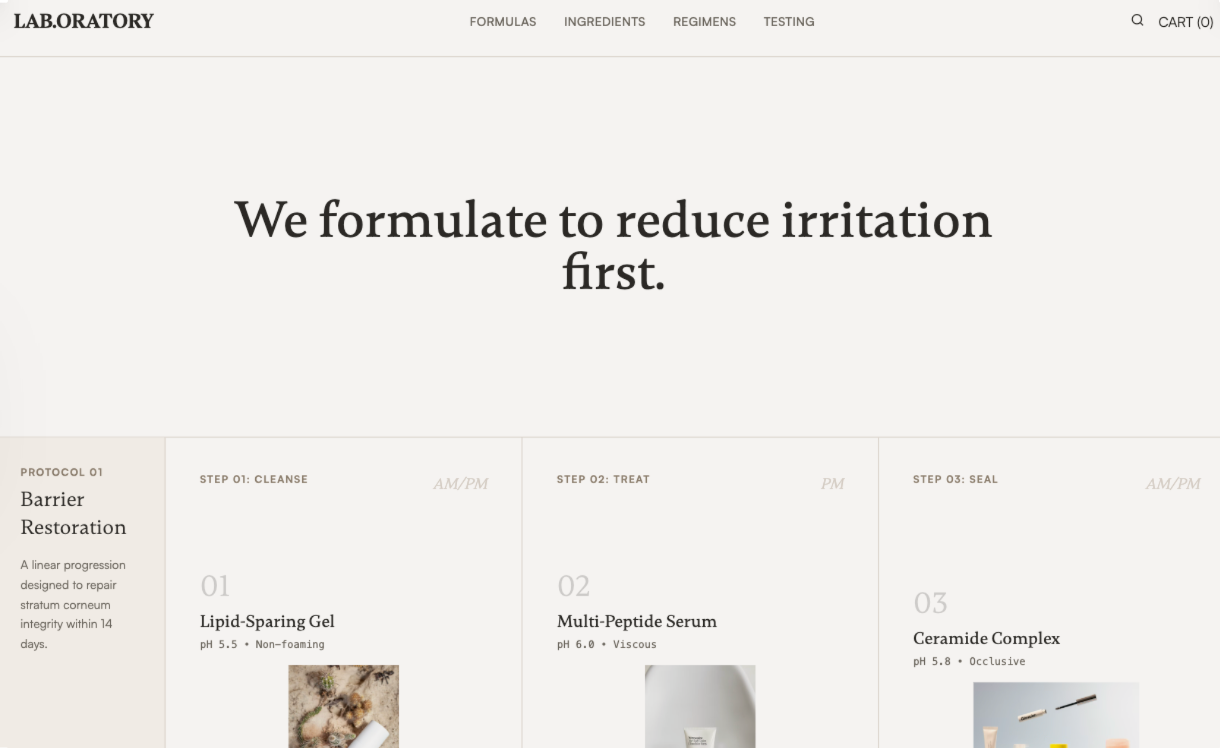
Laboratory Skincare is a warm academic, methodical design system inspired by research journals and clinical lab notebooks. It features a grid-based, disciplined layout with generous white space and a restrained color palette of off-whites, warm grays, and soft blacks. Ideal for medical-grade skincare, high-tech beauty, pharmaceutical brands, or scientific SaaS, the design focuses on data-driven trust, factual evidence, and structural clarity over luxury tropes. Key features include tabular data presentation, formula sheets, and a 'Protocol' approach to content organization.
Summary
A methodical 'Lab Notebook' aesthetic for e-commerce or informational sites, emphasizing clinical precision, scientific integrity, and grid-based structure. Uses high-contrast serif typography for headers and sans-serif for technical data, with a color palette rooted in off-white paper tones and technical annotations.
Style
The style is defined by a 'warm clinical' theme. Typography pairs the elegant serif 'Gambetta' for emphasis and formulaic numbers with the functional sans-serif 'Satoshi' for body and labels. Colors utilize #F5F3F0 (Paper) and #2A2824 (Ink) with #8B7D6D (Warm Gray) for meta-data. Micro-interactions are minimal: simple line-drawing hover effects and 1px border transitions.
Layout & Structure
A structured, section-heavy layout that mimics a scientific report. It uses a vertical sidebar logic for section labels and a grid divide for content blocks.
Clinical Header
Opening Statement (Hero)
Regimen Protocol Map
Formula Detail Sheet
Ingredient Deep Dive (Accordion)
Clinical Proof Section
Restrained Footer
Components
Formula Annotation Label
A floating data tag used on images or detail sections.
Data-Driven Review Card
A factual, no-frills review layout.
Special Notes
MUST: Maintain a strict 1px grid throughout. Use high-quality, desaturated photography. Focus on 'evidence' over 'lifestyle'. MUST NOT: Use vibrant colors, rounded buttons, drop shadows, or decorative illustrations. Keep whitespace intentional and 'cold' but readable.