Design prompts for forms
A form has one job: get the right information with the least friction, and make every step feel answerable. The ones that convert keep a single column with a visible label above each field, ask for only what they truly need, validate inline as you go instead of failing at the very end, design all the field states (focus, error, success, disabled) rather than just the resting one, and end on one button that names the outcome. The prompts below are the most-copied form designs in the Superdesign library, from multi-step wizards and onboarding flows to contact, sign up, checkout and survey forms. Open any one to see the exact prompt behind it, then tweak the copy and generate your own editable version in seconds.
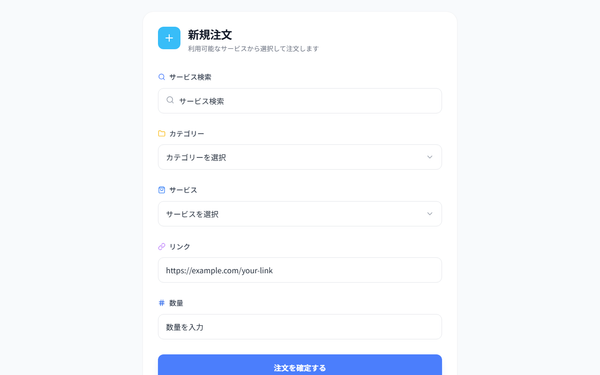
Refined Order Form UI
Create a refined combobox/dropdown component matching the provided design style. Features: Clean white background with subtle borders, left-aligned labels with icon badges (emoji/icon style), dropdown triggers with chevron icons on the right, smooth animations. Include states for: text input fields with search icons, category/service selector dropdowns, link input field with URL placeholder. Use consistent spacing, typography, and the same visual style as the reference image. Color scheme: blue accents (#4B7EFC or similar), neutral gray text, clean white inputs. Make it production-ready with smooth interactions.
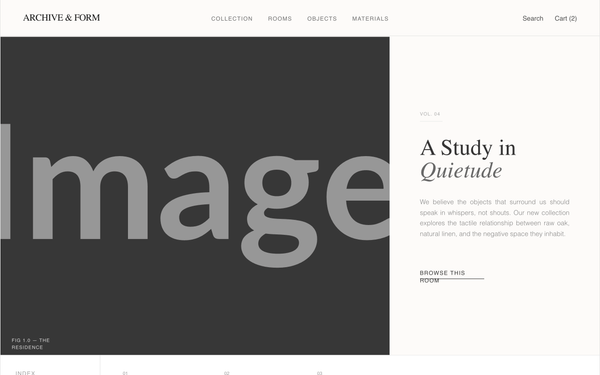
Archive & Form - Updated Hero Image
An editorial, museum-grade furniture catalog design system with an 'Archive & Form' aesthetic. Featuring a warm minimalist color palette of off-white and charcoal, it utilizes a sophisticated pairing of Zodiak serif and General Sans typography. The layout mimics high-end print magazines with asymmetric grids, thin architectural borders, and generous negative space. Suitable for luxury furniture, high-end architecture firms, fashion lookbooks, and minimalist eCommerce brands. Key features include scroll-triggered fades, slow-scale image interactions, and index-style navigation.
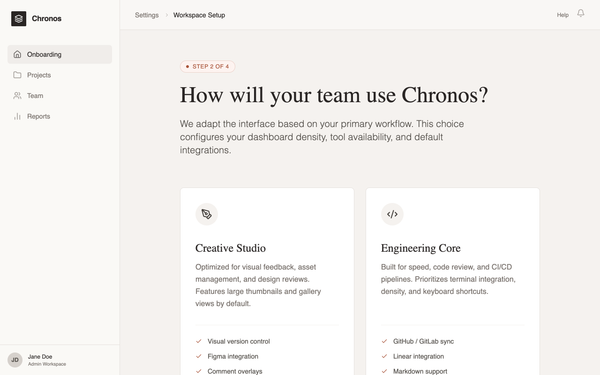
Editorial SaaS Onboarding
An editorial SaaS onboarding experience featuring a calm, sophisticated aesthetic. It uses a muted warm stone palette with terracotta accents, high-contrast serif headlines (Crimson Pro) paired with clean sans-serif UI text (Inter). The layout follows a natural document flow within a product shell, avoiding scroll-locks or overlays. Suitable for premium B2B SaaS, design tools, publishing platforms, and luxury fintech applications that prioritize a confident, professional, and non-intrusive user experience.
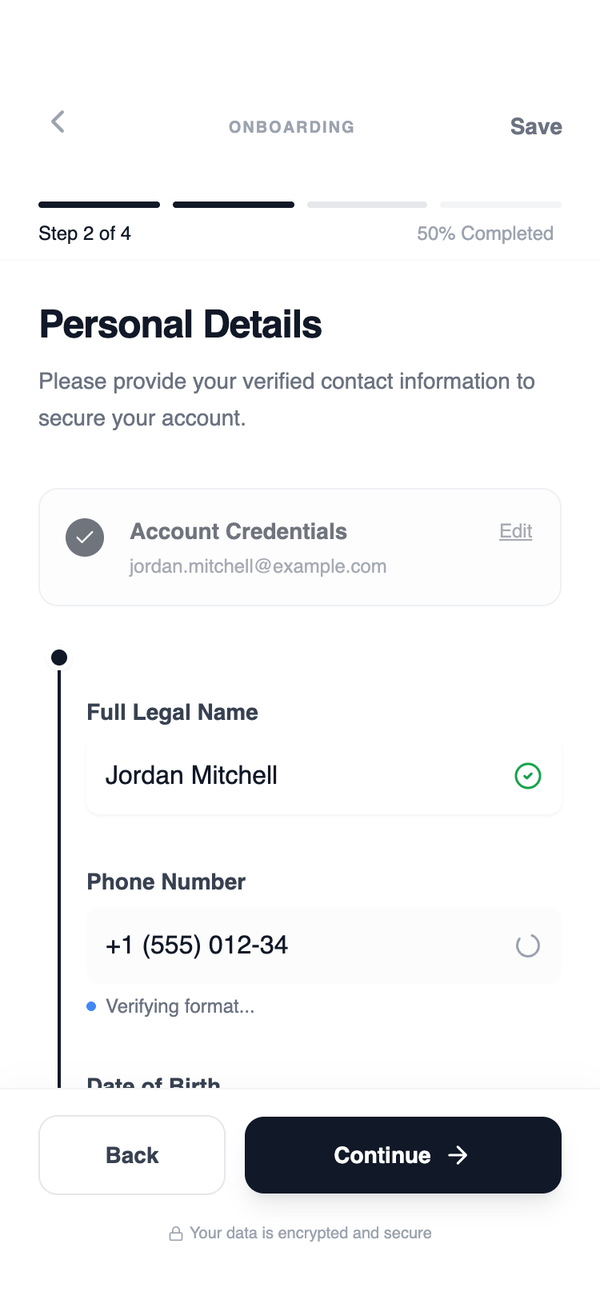
Multi-step Form Flow
A modular, step-based mobile flow designed for creating or editing content with clarity and momentum, where each screen presents a single logical input group, guided by a top progress indicator and a bottom-anchored primary action. Users can move forward or backward without data loss, with progress automatically saved between steps, while the reusable layout system supports optional and conditional steps across different flows. Presented in a minimal wireframe style, visual progression is communicated through spacing and hierarchy rather than visual decoration, making this approach best for onboarding, multi-step setup, preference configuration, and any mobile experience where reducing cognitive load and maximizing completion rate are critical.
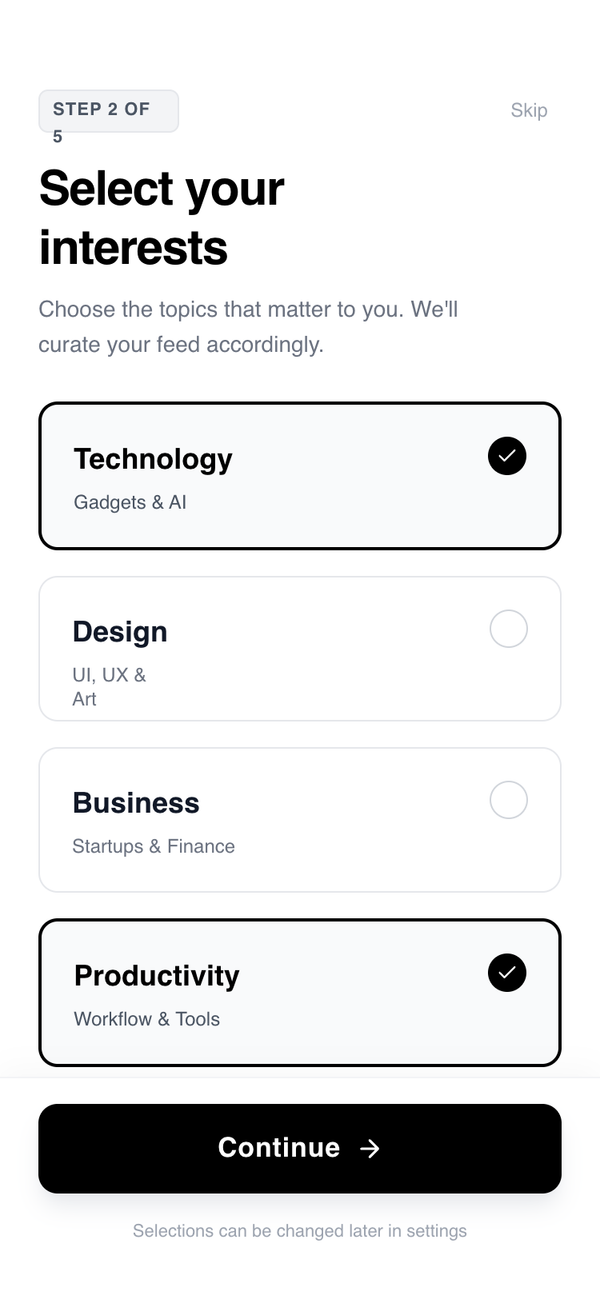
Account Setup Flow - Goals / Interests (Card-Based)
A sleek, minimalist, and highly interactive 4-step onboarding flow designed for mobile-first experiences. Features high-contrast black and white aesthetics, modern typography using General Sans, and fluid motion using the View Transitions API. Ideal for SaaS, fintech, or lifestyle apps needing a premium, frictionless user registration or configuration sequence. Key elements include a persistent progress bar, springy micro-interactions, and clear, bold editorial typography.
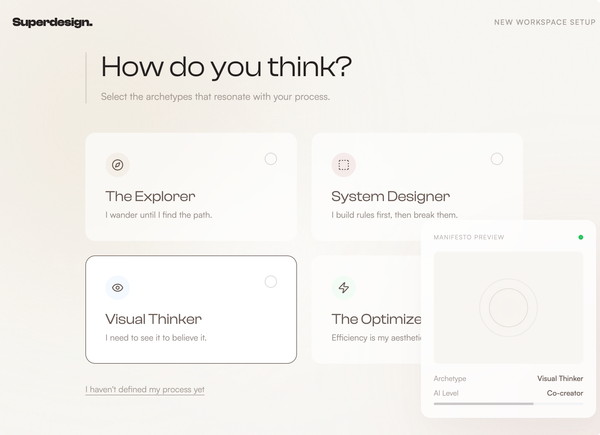
Editorial onboarding
A sophisticated, editorial-style onboarding experience for creative SaaS or workspace platforms. It features a muted earth-tone palette, a tactile noise grain texture, and high-end typographic pairing. The design utilizes huge display type, organic ambient background animations, and an intentional use of white space to create a premium, mindful user journey. Key features include a fixed 'Echo Panel' for live state updates, masonry card layouts with subtle rotations, and custom interactive dials for user input. It is optimized for creative agencies, architecture portfolios, fintech, or productivity tools aiming for an 'elevated' brand feel.
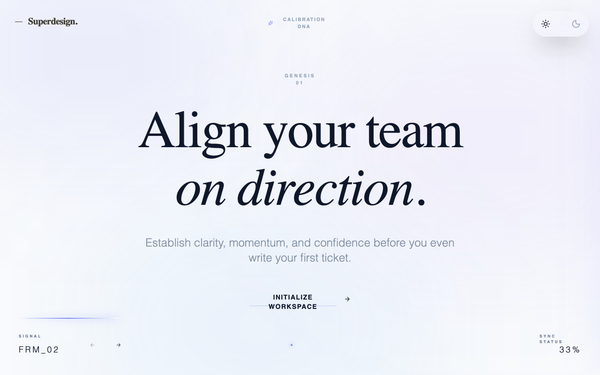
Luminous Ethereal Glassmorphism Onboarding
Luminous Ethereal is a deep-space glassmorphism design system characterized by frosted translucent panels, slow-moving animated mesh gradients, and ultra-thin line iconography. It uses a sophisticated pairing of Manrope sans-serif and Libre Baskerville editorial serif to create an atmosphere of high-end precision and cosmic calm. This style is exceptionally suited for AI-driven platforms, fintech, high-tech SaaS onboarding, and creative agency portfolios that require a futuristic yet premium feel. Key elements include 'backlight' glow effects, 'laser' thread progress indicators, and interactive cards that respond with subtle chromatic shifts.
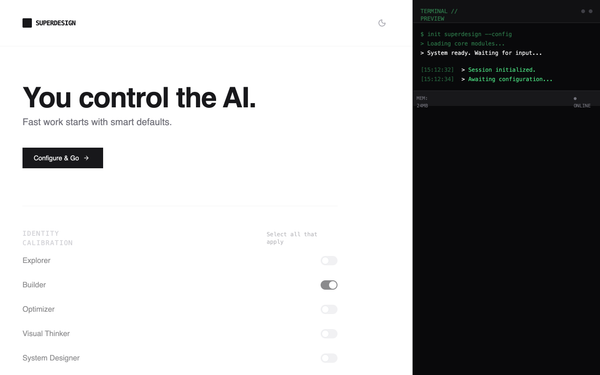
Superdesign Setup - Inline Preview
A minimalist, developer-centric configuration interface featuring a monochrome technical aesthetic. It utilizes a high-contrast dark/light mode, JetBrains Mono for system labels, and Inter for UI elements. Key features include an inline state-preview logging system, custom range sliders for AI intervention thresholds, and segmented controls for workspace density. Suitable for SaaS setup wizards, developer tools, AI configuration panels, and fintech dashboards that prioritize functional clarity and a 'terminal-lite' feel.
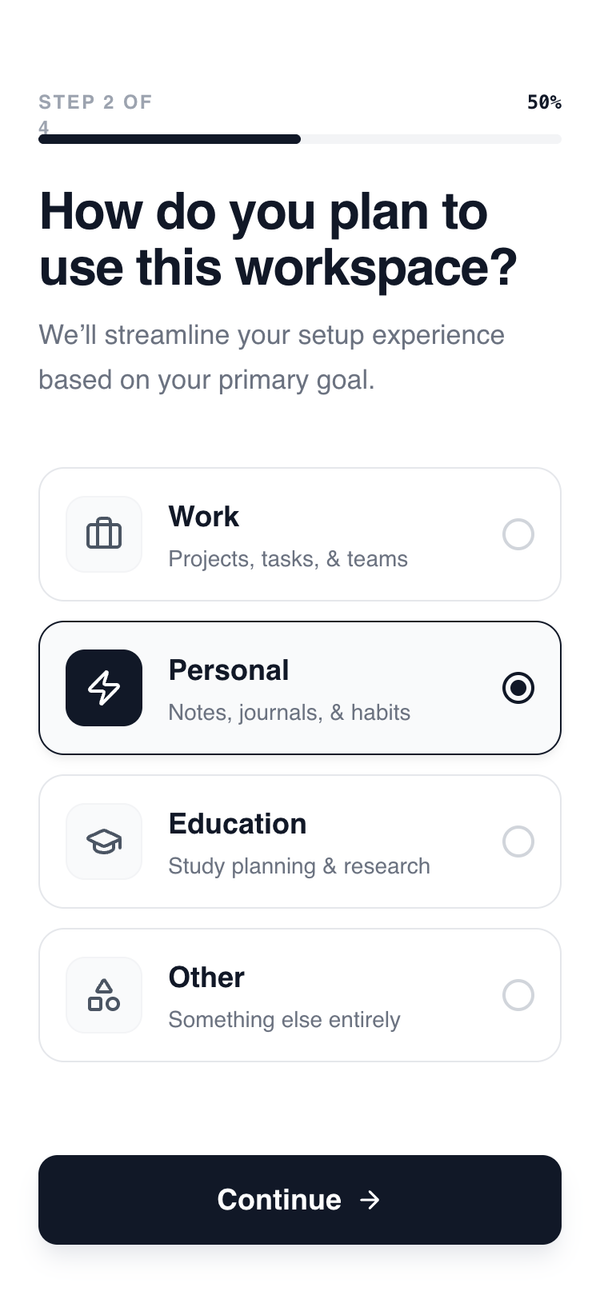
Account Setup Flow - Progressive Disclosure Layout
A focused, progressive account setup screen presented in a clean wireframe style, showing only one question or choice group per screen to reduce cognitive load. Each step follows a clear vertical flow: a prominent title question at the top, a single input area (such as selectable options, a slider, or a list), optional helper text for clarification, and a single bottom-aligned primary CTA to proceed. There are no secondary actions or visual distractions, creating a lightweight, intentional layout that guides users smoothly through setup and encourages completion step by step.
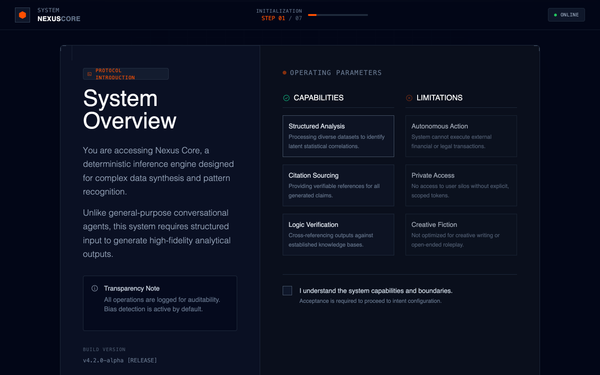
Technical System Onboarding
A technical, research-backed onboarding system design using a dark slate palette with high-visibility signal orange accents. Optimized for high-fidelity AI systems, data science dashboards, fintech terminals, and developer tools. Features editorial modern grotesk typography, monospace metadata, grid-based layouts, and a modular 'Capabilities Matrix' structure. Emphasizes reliability, transparency, and deterministic control through structured information hierarchy and a professional, no-nonsense aesthetic.
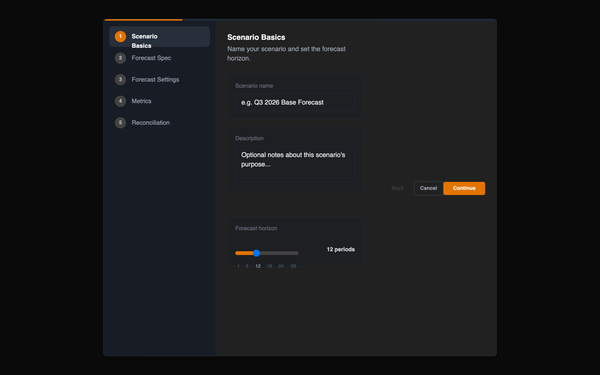
Refined Scenario Basics Wizard Step
A refined, professional dark-mode wizard interface for SaaS and fintech applications. Features a sidebar-driven navigation, structured data entry with high breathing room, and a signature orange accent (#e37400). The layout uses a 840x720px centered dialog with a split sidebar/main content architecture, editorial-style typography using 'Inter', and custom-styled range sliders for complex parameter control. Suitable for scenario planning, analytics setup, or complex multi-step configuration flows.
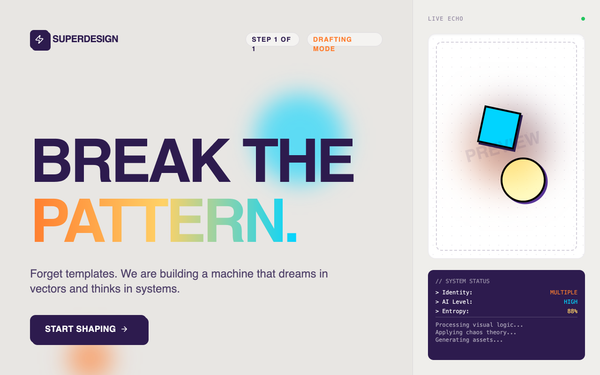
High energy onboarding
A maximalist, neobrutalist design system featuring unconventional geometric typography, high-contrast colors, and interactive card stacking. Built for energetic SaaS onboarding, creative platforms, or experimental fintech interfaces. Uses Clash Display and Satoshi fonts with hard shadows (#2D1B4E), vibrant accents in orange (#FF7D2E) and cyan (#00D4FF), and a signature noise-textured background overlay.
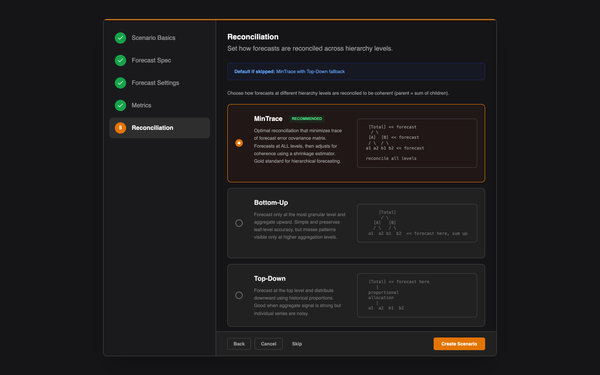
Reconciliation Wizard - Vertical Cards
A high-precision dark-mode wizard interface for technical configurations, featuring a vertical card system for complex choices. This design system is optimized for data-heavy applications, fintech platforms, or scientific tools that require granular control and clear hierarchy. It utilizes an industrial color palette of deep grays (#151517, #212121) paired with a high-visibility orange accent (#e37400). Key elements include ASCII-based visualization blocks for technical clarity, a persistent sidebar for multi-step navigation, and compact, metadata-rich typography using the Inter font family.
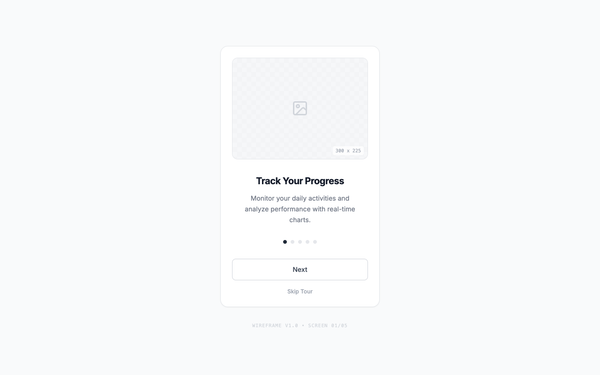
Interactive Onboarding Carousel
A minimal, functional onboarding carousel with five steps, featuring smooth sliding transitions. Users can navigate forward and backward with Next/Previous buttons or jump directly via clickable pagination dots. JavaScript manages step state, updates titles, descriptions, and active indicators, while subtle CSS transitions maintain a clean wireframe aesthetic throughout the experience.
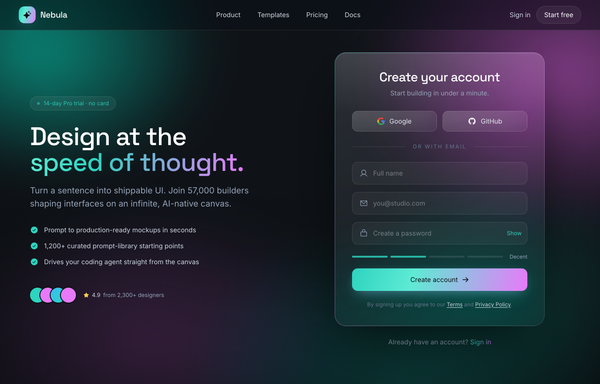
Aurora Glass - Sign Up at the Speed of Thought
A premium dark glassmorphism sign-up screen: a one-screen hero+signup landing on a near-black ink canvas lit by a slow-drifting teal+magenta aurora and film grain, under a translucent sticky glass nav. A two-column hero splits a marketing pitch on the left (a 'no card' trial pill, a Space Grotesk headline with a teal-to-magenta gradient 'speed of thought.' line, a teal-check benefit list and a 4.9-star social-proof cluster) from a frosted-glass auth card on the right that carries a teal-to-magenta gradient edge-light: Google + GitHub buttons above an 'or with email' divider, icon-leading full-name / email / password fields with a Show/Hide toggle and a four-segment strength meter, and a teal-to-magenta gradient 'Create account' CTA. Teal + magenta accents, Inter + Space Grotesk, plus a full-bleed glass trust strip.
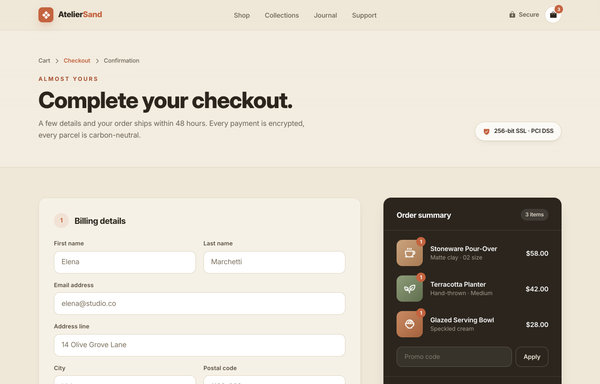
Checkout - Atelier Sand (warm sand, AA-contrast-fixed)
A warm sand-and-terracotta e-commerce checkout: two-column billing + payment form on cream cards beside a sticky dark order-summary card, with a segmented Card/PayPal toggle and an AA-contrast Pay button.
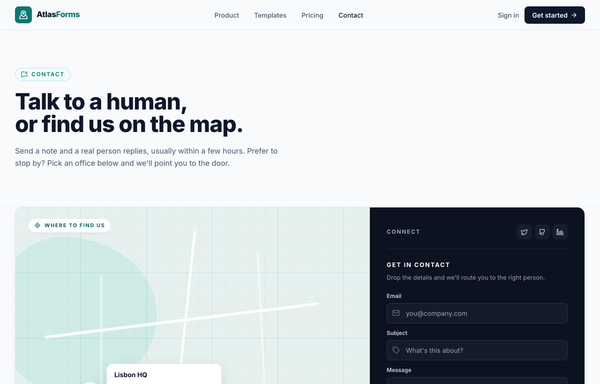
Contact & Where to Find Us - Atlas Forms (map-location teal)
A clean, modern LIGHT contact page for a forms-tool brand (AtlasForms), built around one signature pairing: a large CSS-only cartographic 'Where to find us' MAP panel beside a compact DARK form rail, inside a single rounded-2xl bordered white card split lg:grid-cols-[1.65fr_1fr]. A sticky blurred paper nav (a teal map-pin logo tile + an 'Atlas' + teal 'Forms' wordmark, Product/Templates/Pricing/Contact links with an animated teal underline, a 'Sign in' link and a dark 'Get started' button) tops the page; a full-bleed intro band carries a teal 'Contact' eyebrow pill, a 'Talk to a human, or find us on the map.' display headline and a reassuring lead. THE CONTACT CARD pairs a WIDE LEFT map/location panel (a faux-cartographic .map-grid canvas of soft teal land blobs + rounded white roads, a 'Where to find us' label pill, a teal map PIN with a white 'Lisbon HQ' callout of email + phone, and a 2/4-up city strip Lisbon / Austin / Amsterdam / Singapore with a teal active underline) with a NARROW RIGHT dark ink-950 FORM RAIL (a 'Connect' header with social icon tiles, a 'Get in contact' form of Email / Subject / Message dark inset fields with leading icons and a teal 'Send message' button, a 'reply within one business day' line, and an 'Office hours' block with day rows + an inline contact card of email / phone / address). Inter throughout, Lucide icons, a strict paper/ink/teal palette with hairline ink-200 borders, dark inset fields that focus to a teal ring, and box-shadows for the card / floating pin / button glow. The reusable signature is the MAP-BESIDE-DARK-FORM contact system: an asymmetric map-panel-beside-dark-rail card, a CSS-only cartographic map texture, and one calm teal accent. Mood: calm, trustworthy, modern, local and human, never a cold generic SaaS form.
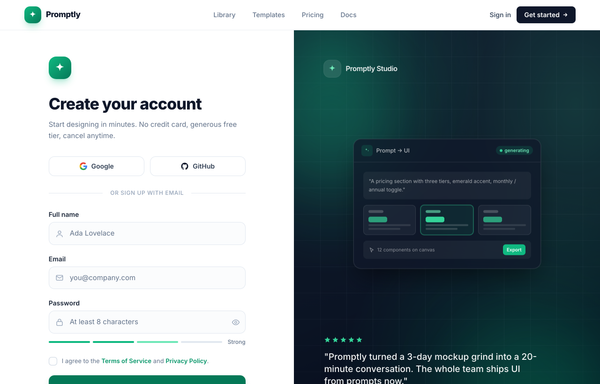
Create your account · Promptly - split-image emerald sign-up
A two-column desktop sign-up page: focused email + Google/GitHub social form on a bright white left half, dark emerald 'brand-mesh' panel with a floating product mock and testimonial on the right; sticky translucent nav, Inter, slate neutrals with a single emerald accent.
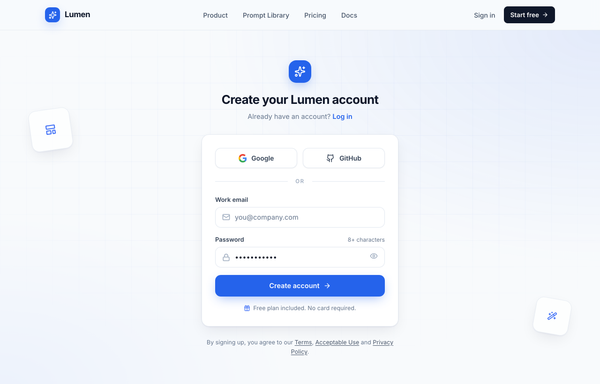
Create your Lumen account - centered card (cobalt)
Centered single-column signup card on a light slate canvas with a sticky blurred nav, Google/GitHub social auth, an email + password form, and a cobalt CTA over a quiet engineering-grid background.
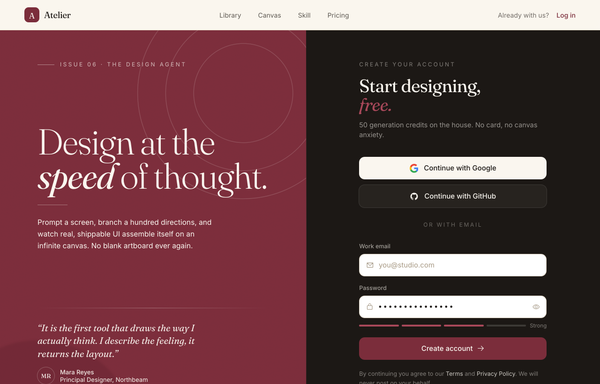
Design at the Speed of Thought - Editorial Split Sign-Up
An editorial, magazine-style sign-up screen built as a full split-screen landing: a sticky translucent cream nav over a two-pane main. The LEFT is an oversized Fraunces-serif brand panel on a textured deep-burgundy ground (film grain, faint concentric arcs, a soft bloom) with an 'Issue 06 . The Design Agent' eyebrow, a 'Design at the speed of thought.' display headline (italic 'speed'), a value paragraph and a pull-quote testimonial with an initials avatar plus a three-icon feature row. The RIGHT is a near-black ink account-creation column: a 'Start designing, free.' heading, Google + GitHub OAuth buttons above an 'or with email' divider, white burgundy-focus-ring email + password fields (an eye toggle + a four-segment strength meter) and a burgundy 'Create account' CTA. Below the split: a full-bleed cream 'Trusted in the studios shipping fastest' proof strip and a dark ink FAQ/footer accordion. Cream + burgundy + ink palette, Fraunces serif + Inter.
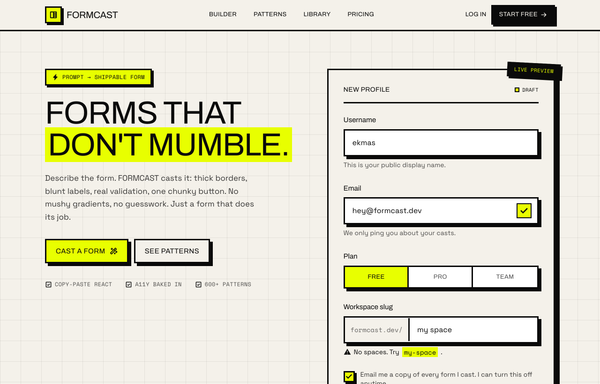
FORMCAST: Forms That Don't Mumble
A neo-brutalist form-builder landing page: thick 3px ink borders and hard offset shadows on warm paper with one electric acid-yellow accent, anchored by a live-preview profile form showing every field state.
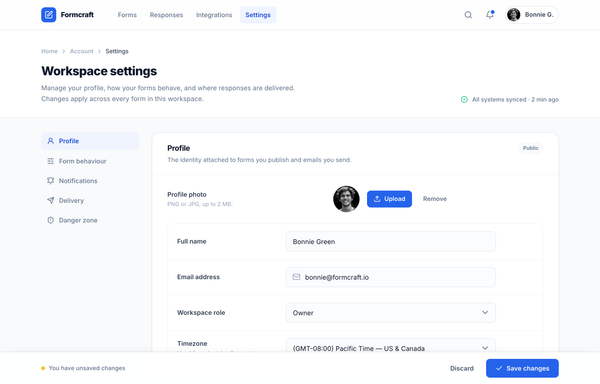
Formcraft - Workspace Settings (cobalt two-column)
A two-column SaaS workspace-settings screen: sticky app nav, left section nav, grouped settings cards with toggles, a segmented control, selectable delivery cards, and a fixed save bar, in Inter on slate with one cobalt accent.
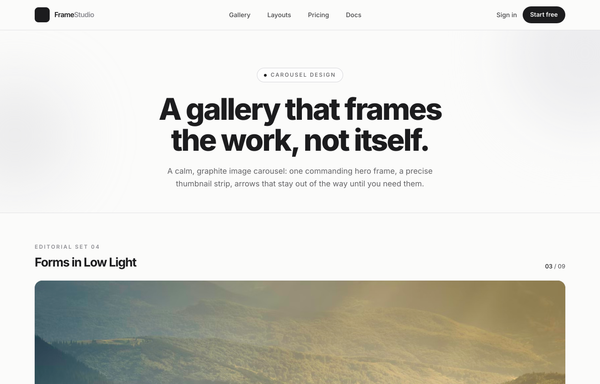
Forms in Low Light - A Graphite Image Carousel
A calm, editorial image carousel built as a complete one-screen gallery landing on a graphite + off-white 'paper' palette with a single platinum accent. A sticky translucent paper nav over a centered hero band (a 'Carousel Design' pill eyebrow, an extrabold tight-tracked 'A gallery that frames the work, not itself.' headline, a muted intro line), then the carousel: a meta row ('Editorial Set 04' / 'Forms in Low Light' + an '03 / 09' counter) above a single commanding 16:9 hero frame on a near-black graphite stage with a soft bottom vignette, quiet glass prev/next caret arrows that stay calm until hover, a bottom-left 'Frame 03 / Ridge at Dusk' caption, a bottom-right glass play/fullscreen cluster and centered dot pagination, synced to a horizontally-scrolling thumbnail strip whose active thumb wears a double-ring highlight (the rest at 55% opacity, brightening on hover, the right edge masked). Below: a hairline-gridded three-up feature row, a full-bleed dark graphite palette section with a four-swatch ramp (#1c1c1e / #2c2c2e / #c7c7cc / #fbfbfa) and an 'Open the editor' CTA, and a paper footer. Inter throughout with tight display tracking.
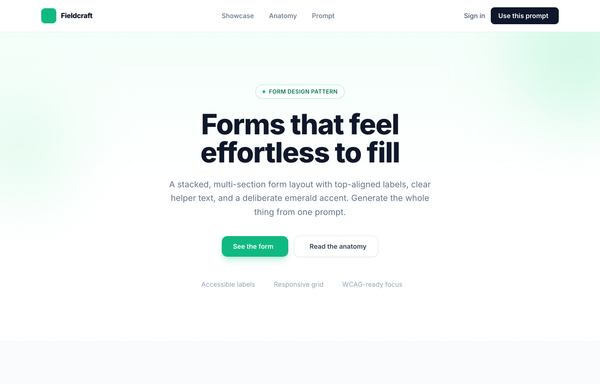
Forms that feel effortless to fill - Fieldcraft
A stacked, multi-section account-settings form on a white card: top-aligned labels, helper text, a 6-column responsive grid, custom checkboxes and radios, and one disciplined emerald accent for focus and the primary action.
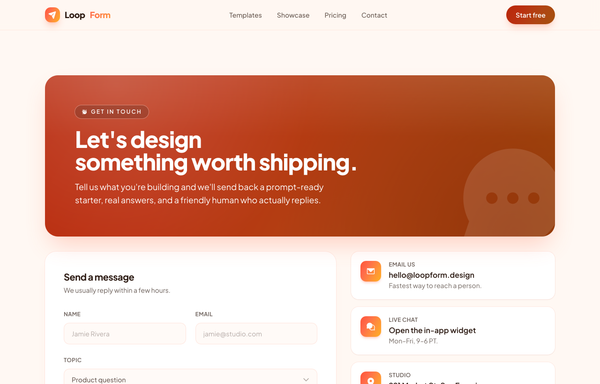
Gradient Band Sunset - Contact form (legibility fixed)
Warm sunset-gradient contact page for a design-tool brand (LoopForm), built around a legibility discipline: the bright coral->amber sunset is reserved for icon tiles only, while the header band and every white-text CTA use a deepened 'ember' register so white text clears WCAG 4.5:1 at every gradient stop. A sticky translucent cream nav (a sunset paper-plane logo tile + a 'Loop'/gradient-text 'Form' wordmark, Templates/Showcase/Pricing/Contact links and an ember 'Start free' pill) sits over a single contact section: a large rounded ember-gradient header band (a 'Get in touch' hand-wave pill, an extrabold white 'Let's design something worth shipping.' headline, a white intro line and a giant faint chat-bubble watermark) above a 12-column body split into a white form card (Name/Email row, a Topic select, a Message textarea, a coral-accent opt-in checkbox and an ember rounded-full 'Send message' pill) beside a quick-contact rail of three hover-lift chips fronted by bright sunset icon tiles (Email us / Live chat / Studio) plus a 'Find us online' social-icon card. A slim hairline footer closes it. A cream + coral->amber sunset palette with a Plus Jakarta Sans voice.
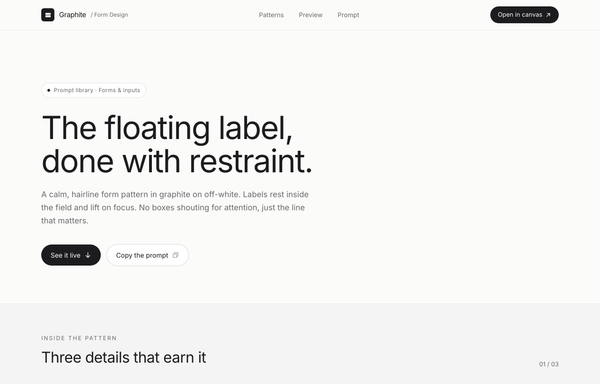
Graphite · Floating-Label Form Design
A calm, premium account form in graphite on off-white: floating-label hairline inputs that lift on focus, Inter type, one solid ink button, no boxes or shadows.
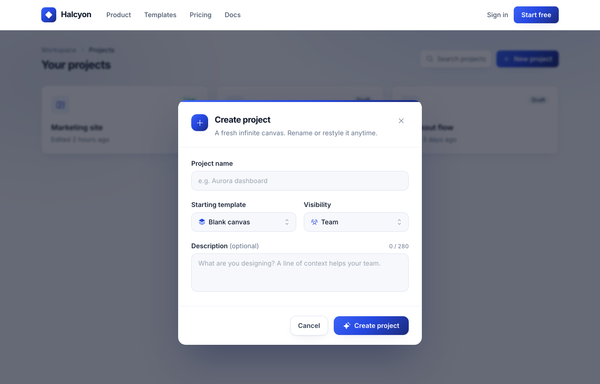
Halcyon - Create project (form modal, cobalt→navy)
A centered 'Create project' form modal in cobalt→navy over a dimmed product workspace: gradient icon header, text input, a two-up template/visibility select row, a counted description textarea, and Cancel / Create project actions.
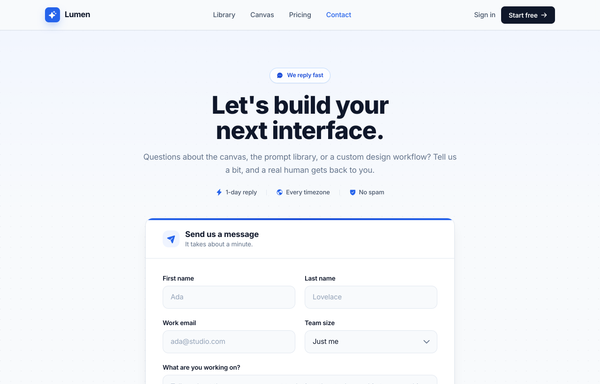
Let's build your next interface - Cobalt Contact
Full-bleed cobalt-on-white contact page for an AI product-design tool (Lumen): a sticky translucent nav and a centered 'Let's build your next interface.' headline with a 1-day-reply / every-timezone / no-spam trust line over ONE centered white card -- a 'Send us a message' header strip above a form (a first/last name row, a work-email + team-size select row, a 'What are you working on?' textarea, a Product/Billing/Partnership topic chip row and a cobalt 'Send message' CTA) topped by a cobalt gradient hairline -- then a labelled 'Other ways to reach us' divider into three hover-lift info cards (Help center / Community / Developer API) and a slim footer.
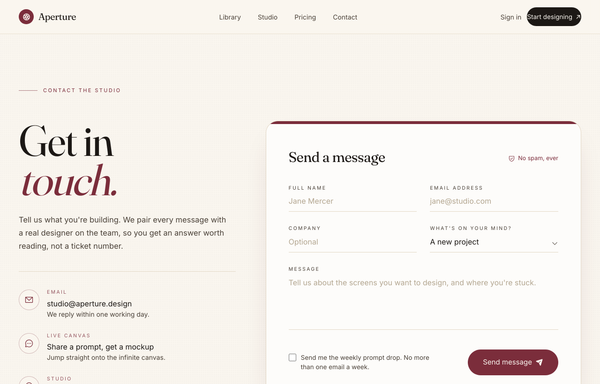
Letters to the Studio - An Editorial Get-in-Touch
Warm editorial-magazine contact page for a design studio (Aperture): a sticky cream nav, then an asymmetric two-column block on cream textured paper -- a left editorial column with an oversized Fraunces serif 'Get in touch.' headline (the second word a burgundy italic), a human intro, a hairline divider, a circular-outlined-icon contact list (Email / Live canvas / Studio) and a social-icon row, beside a white rounded form card (a burgundy top accent bar, a 'Send a message' serif header + a 'No spam, ever' shield chip, underline-only fields that turn burgundy on focus -- a name/email row, a company/topic-select row, a message textarea -- an opt-in checkbox and a burgundy pill 'Send message' submit), closed by a slim italic-serif footer. A cream + deep-burgundy palette with a Fraunces + Inter serif/sans pairing.
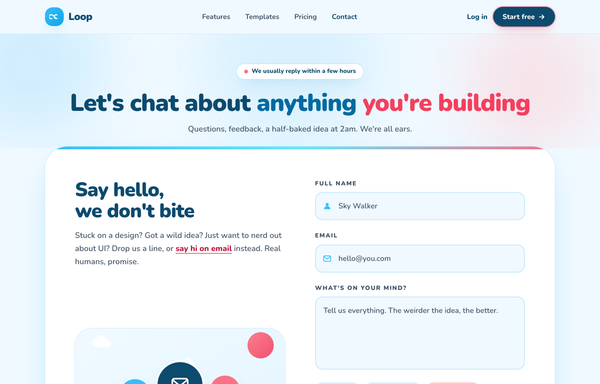
Loop · Say hello, we don't bite (friendly illustrated sky)
A warm, playful illustrated contact page (Loop) in a sky-blue + coral two-accent palette on a cloud-white canvas: a sticky blurred nav, a centered two-tone "Let's chat about anything you're building" hero with a pulsing reply-time pill, and one giant rounded white card splitting a hand-drawn CSS+SVG illustration panel (floating sun, clouds, channel bubbles, grass) and copy on the left against a multi-field form with icon-prefixed sky-ring inputs, emoji topic chips and a gradient send button on the right, then a row of three alt-contact cards and a deep sky-ink footer. Heavy rounded Nunito (up to black 900), bubbly corners, cheerful and human, never a cold corporate form.
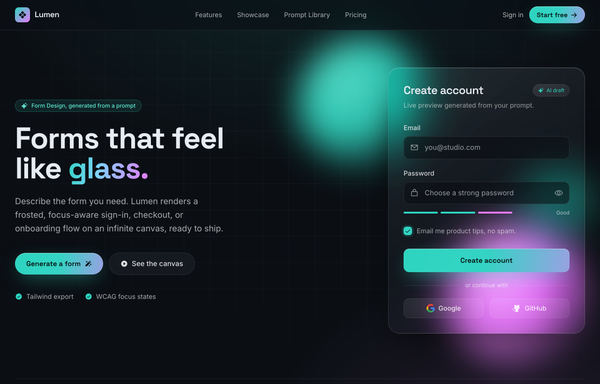
Lumen - Forms that feel like glass
A dark glassmorphism form landing page: a frosted, focus-aware account form floating over drifting aqua-and-magenta aurora orbs, with gradient CTAs, a feature grid, and login/checkout/error form showcases.
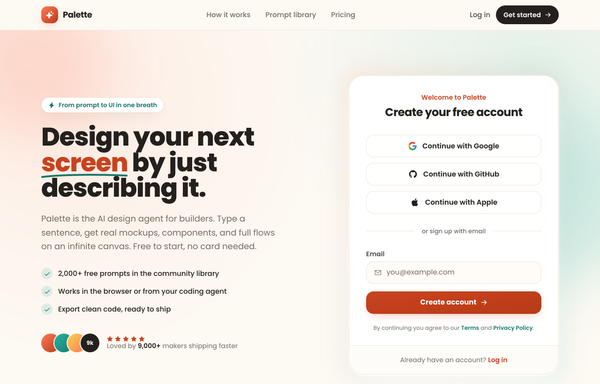
Palette - Social-first friendly sign-up
A warm, social-first sign-up screen on a cream canvas: a two-column hero+signup landing with a friendly product pitch on the left (hand-drawn underline, teal-check benefits, a 5-star social-proof cluster) and a white rounded card on the right that leads with three full-width stacked social-auth buttons (Google, GitHub, Apple) above an 'or sign up with email' divider and a single email field with a coral 'Create account' CTA. Coral + teal accents, Poppins, a sticky blurred nav, a logo marquee, a three-step how-it-works, and a dark gradient CTA band.
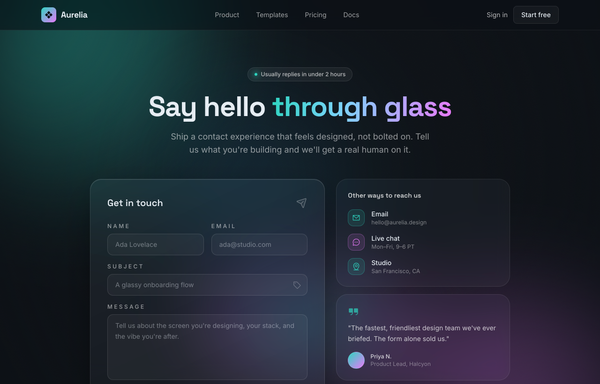
Say Hello Through Glass - Aurora Contact
Dark glassmorphism 'aurora' contact page for a design tool (Aurelia): a sticky translucent nav and a centered 'Say hello through glass' gradient headline over a two-column hero -- a large frosted-glass contact-form card (a name/email row, a subject field, a message textarea, a 'New project / Partnership / Just saying hi' chip row and an aqua-to-magenta gradient 'Send message' CTA) with inputs that glow aqua or magenta on focus, beside two soft-glass side cards (a tinted-icon contact list + a customer quote) -- all lit by drifting aqua/magenta/sky aurora blobs on a near-black ink canvas, then a logo trust strip, a 'Why the glass form' feature grid, a glass CTA banner and a slim footer.
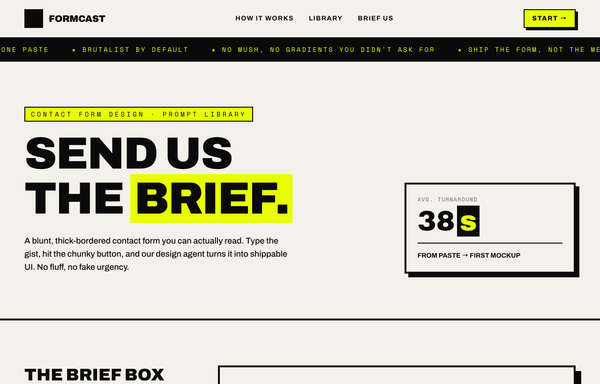
Send Us the Brief - Brutalist Contact Form
Loud neo-brutalist contact page for a design-tool brand (Formcast), built around a blunt two-field 'brief box'. A paper-and-ink base (paper #f4f1ea canvas, ink #0a0a0a text/borders) with exactly one high-voltage acid-yellow accent (#e8ff00), thick 2px/4px ink borders, hard offset drop shadows (zero blur, e.g. 8px 8px 0 0 #0a0a0a), depress-on-press chunky buttons, and an acid focus shadow on the fields, in a heavy Archivo (up to 900) + Space Mono pairing. A sticky paper nav (an ink+acid logo tile + a FORMCAST wordmark, How it works/Library/Brief us hover-fill links and an acid 'Start' button) sits over a scrolling ink marquee strip and a hero (an acid eyebrow pill, a giant uppercase 'SEND US THE BRIEF.' headline with 'brief.' highlighted in acid, and a '38s' avg-turnaround stat card). The centerpiece is a contact section split into a left rail of three numbered instruction tiles and a big bordered FORM CARD with an oversized E-Mail input + Message textarea, a Brutalist/Editorial/Minimal/Surprise-me style-chip row, and a chunky Cancel + acid 'Send' button row. A 'Three blunt steps' card row and a dark ink footer with an acid CTA close the page. The reusable signature is the neo-brutalist contact form: thick ink borders + hard offset shadows + one acid accent + a heavy Archivo/Space Mono voice.
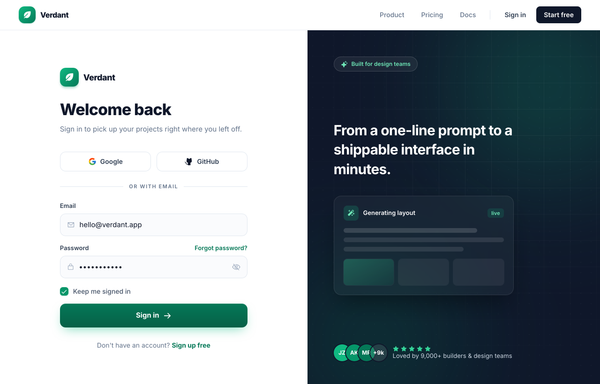
Sign in to Verdant - Classic Split (Emerald)
A full-bleed classic split sign-in page: white emerald-accented auth form on the left (social + email login, gradient Sign in CTA), a dark slate brand panel with ambient glows and a floating showcase card on the right, and a sticky nav above both.
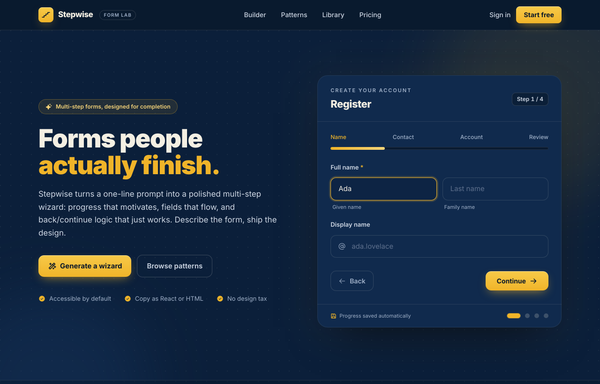
Stepwise - Multi-step Wizard (Navy/Amber)
Dark navy multi-step form wizard landing page with one warm amber accent: hero register card with a gradient progress bar, step ticks, active focus field, Back/Continue nav and step dots, plus patterns, library and pricing.
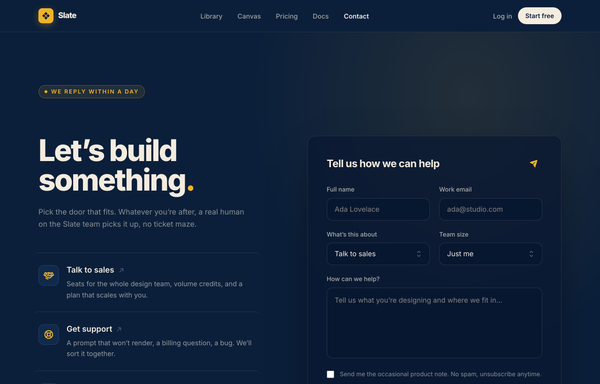
Talk to Slate - Contact (reasons-split-navy)
Warm, premium dark split contact page for an AI design-tool brand (Slate), modeled on Linear's 'Contact sales' layout but reskinned to a midnight-navy canvas with a cream text family and ONE amber/gold accent. A single full-bleed two-column contact section: a LEFT 'reasons to reach out' rail (an amber 'We reply within a day' status pill, a tight-tracking display headline 'Let's build something.' with an amber period, an intro line, and a three-row routed-reasons list with amber icon tiles for Talk to sales / Get support / Press & partners plus a mailto fallback) beside a RIGHT elevated form card ('Tell us how we can help' with a paper-plane glyph, a Full name + Work email row, a What's-this-about + Team-size select row, a textarea, an opt-in checkbox and a chunky amber 'Send message' button), with an 'Encrypted & never shared' reassurance line under it. A sticky blurred navy nav (an amber diamond logo tile + a Slate wordmark, Library/Canvas/Pricing/Docs/Contact links, a Log in link and a cream 'Start free' pill) tops the page; a thin hairline trust strip and a four-column dark footer close it. Inter throughout. Subtle dot-grain + warm radial-glow texture, hairline cream/10 borders, dark inset fields (bg #081730) that focus to an amber ring. The reusable signature is the warm-dark split-contact system: a navy canvas + a cream-opacity text ramp + exactly one amber accent, a tight-tracking Inter display headline with a single amber color hit, and an asymmetric reasons-rail-beside-elevated-form layout. Mood: calm, premium, confident and human, never a generic blue SaaS form.
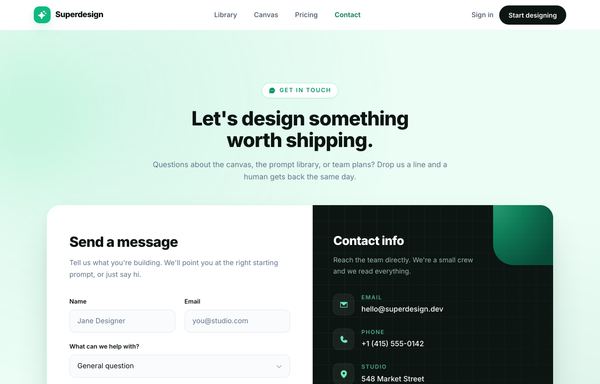
Talk to Superdesign - Contact (split-info-emerald)
Full-bleed emerald-on-white contact page for an AI product-design tool (Superdesign): a sticky translucent nav and a centered 'Let's design something worth shipping.' headline over one big white split card -- a left create-a-message form (name/email, a help-topic select, a message box and an emerald 'Send message' CTA) beside a right near-black info panel with gradient mesh corners, a faint grid, icon-tile email/phone/studio rows, a live 'Online now' availability pill and a social-chip row -- closing with a trust strip and a slim footer.
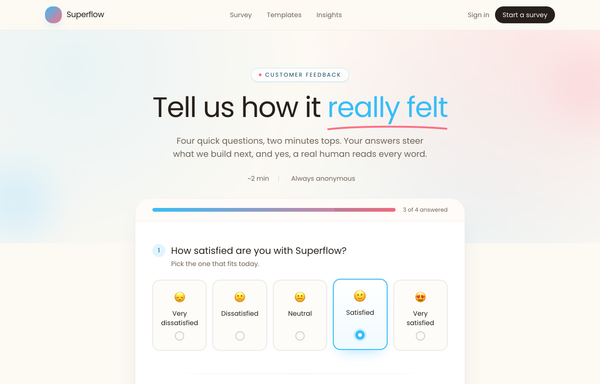
Tell us how it felt · Superflow Feedback (radio/pastel survey)
A warm, playful pastel customer-feedback survey: a soft cream page with sky-blue and coral accents, a centered white survey card overlapping a friendly hero, walking the full range of survey field types: a 5-tile emoji satisfaction radio, multi-select chips, a 0-10 NPS range slider with live Promoter/Passive/Detractor tag, and a counted textarea, topped by a live progress bar.
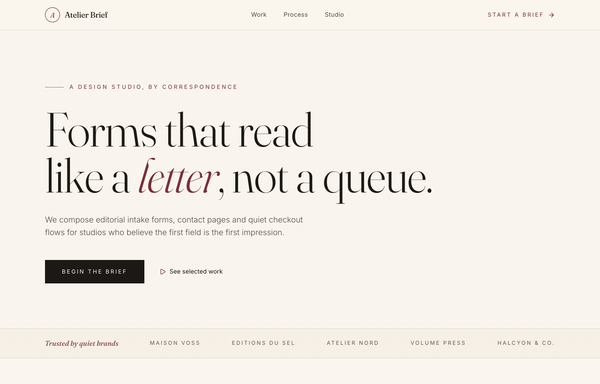
The Atelier Brief - an editorial intake form, set like a letter
An editorial intake form set like a letter: a warm cream page in Fraunces serif + Inter with a single burgundy accent, borderless underline inputs with serif labels (Name / E-mail, Project / Budget, Message), structured by full-bleed cream/ink/cream bands and hairline rules instead of cards, and a quiet ink 'Submit the brief' button.
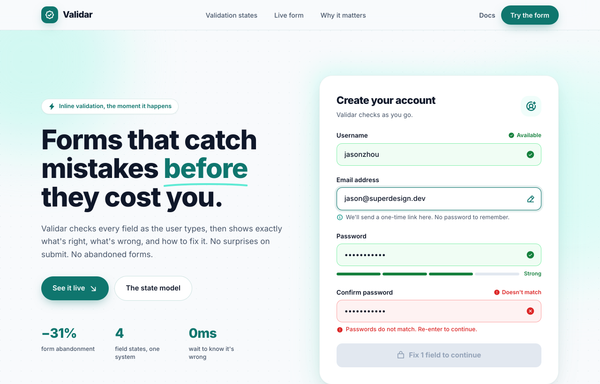
Validar - Forms that catch mistakes before they cost you
A teal-on-paper SaaS landing page for an inline form-validation tool: a sticky glass nav, a split hero with a live account-creation card showing all four field states (idle, active, valid, error) at once, a four-up state-model band, a dark-teal 'submit unlocks itself' section, a benefit grid, and a footer. Color + icon + plain-words validation, Inter, soft layered shadows.
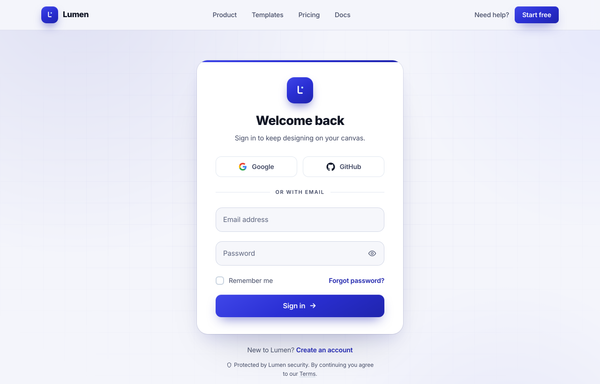
Welcome back · Lumen - centered-card (true cobalt)
A clean centered-card sign-in page on a soft off-white canvas with a single true-cobalt accent: sticky nav, a white rounded-3xl auth card (Google + GitHub social, floating-label email/password with a show/hide toggle, remember-me + forgot, gradient Sign in CTA), and ambient cobalt glows.
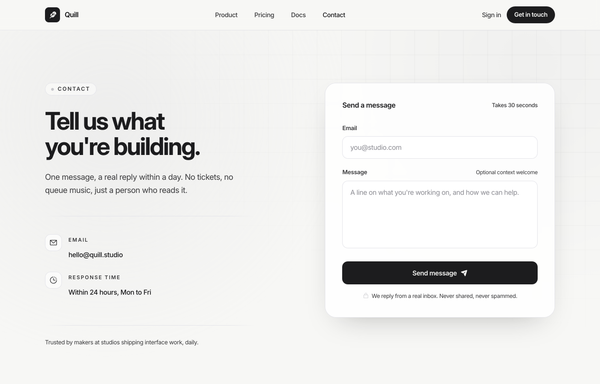
Whisper-Quiet Contact, Cast in Graphite (minimal-inline-graphite)
A whisper-quiet, premium LIGHT contact page for a calm product brand (Quill), built around one signature pairing: a restrained VALUE-PROP / context column on the left beside a compact INLINE form card on the right, the whole page rendered in a strict graphite-monochrome palette with ZERO accent hue (only graphite + a single platinum grey). A sticky blurred paper nav (an ink ph:feather-fill logo tile + a tracking-tightest 'Quill' wordmark, Product/Pricing/Docs/Contact links with Contact at full ink, a 'Sign in' link and an ink rounded-full 'Get in touch' CTA) tops the page over a full-bleed CSS background: a soft platinum grain wash under a hairline grid that fades in only from the top-right corner. THE CONTACT band splits mx-auto max-w-6xl grid-cols-1 -> lg:grid-cols-[1fr_0.92fr]: a LEFT VALUE-PROP column (a 'Contact' eyebrow pill with a platinum dot, a font-bold tracking-tightest 'Tell us what you're building.' headline, a one-line lead, a fading hairline rule, two icon meta rows Email + Response time, and a bottom 'Trusted by makers' trust line) beside a RIGHT compact INLINE FORM card (a rounded-3xl bordered white/85 backdrop-blur card with a 'Send a message' / 'Takes 30 seconds' header, an Email input + a Message textarea using light .field controls that focus to a soft platinum ring + an ink border, a full-width ink 'Send message' button with a paper-plane glyph and a hover lift, and a lock-icon privacy line). Inter throughout (tight, optical-size), Phosphor (ph:) icons, hairline mist borders, and a fading .rule divider. The reusable signature is the GRAPHITE-MONOCHROME INLINE-FORM contact system: a value-prop column beside a compact inline form card, exactly ZERO accent color (emphasis carried by weight + tracking + one platinum grey), and .field inputs that focus to a platinum ring instead of any colored highlight. Mood: quiet, premium, calm, restrained and human, never a loud or colorful SaaS form.
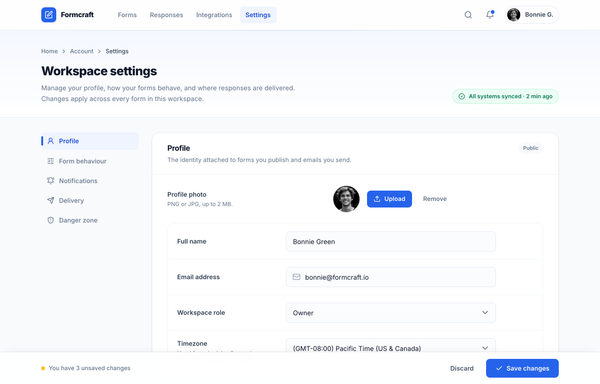
Workspace Settings · Formcraft (two-column, cobalt)
Light SaaS workspace-settings page (form builder): sticky app-bar, tinted header, sticky left section nav + stacked white settings cards, toggles, segmented control and a sticky save bar, on a single cobalt accent over a slate neutral system.
How to prompt a form that looks designed, not generated
An AI design agent has a strong default for a form, and most of those defaults add friction: a long stack of required fields, placeholder text used as labels, a multi-column grid, validation that only fires on submit, just the resting field state, and a vague Submit button on a purple gradient. A good prompt is really a list of constraints that override those defaults. Here is each default you need to override, the words that do it, and a template that bakes them all in.
Design a [light or dark] [type] form for [who fills it] to [the task it completes].
Fields: ask for only [the few you truly need]. Put a visible label above each field, never use placeholder text as the label, and mark optional fields as optional. Do not require a phone number.
Layout: a single column, one field per row, so the eye runs straight down. Group two fields on one line only when they belong together, like city and zip.
Validation: validate inline as the visitor leaves each field, with a specific message that names the fix ("Add the rest, like jane@acme.com"), and include a clear success state after submitting.
Field states: design all of them, the resting, focus, error, success and disabled states, not just the happy path.
Steps: if it is long, break it into a multi-step wizard with a progress indicator, a single logical group per step, and a back button that keeps the data.
Primary action: one solid [button] that names the outcome ("Send message", "Create account"), with a short reassurance line under it. No Reset button.
Style: a neutral base with one [accent] color reserved for focus rings and the primary button. Headline typeface [name], body [name], not the default Inter and no purple gradient.
Labels, not placeholders
Default: It uses placeholder text inside each field as the only label, so the hint disappears the moment you type and you can no longer tell which field is which or check your answers.
Constrain it: Put a persistent label above every field, keep placeholders for examples only, and mark optional fields as optional.
Field count
Default: It asks for everything up front, a long stack of required fields, and makes the phone number required, which has one of the highest abandonment rates of any common field after passwords.
Constrain it: Cap it at the few fields you truly need, never require the phone number, and ask for the rest in a reply or a later step, not at the door.
Single column
Default: It splits the form into a multi-column grid, so the eye has to zig-zag and the order of the fields stops being obvious.
Constrain it: Lay the form out in a single column, one field per row, and group two fields on one line only when they truly belong together.
Inline validation
Default: It checks nothing until you hit submit, then shows one vague red banner and leaves you hunting for which field broke, with no confirmation when things go right.
Constrain it: Validate as the visitor leaves each field, with a specific message that names the fix, and add a clear success state after submitting.
The field states
Default: It styles only the resting field and stops there, so focus, error, success and disabled all fall back to the browser default and look broken.
Constrain it: Ask for all five field states by name: resting, focus, error, success and disabled.
The submit button, color and type
Default: It drops a gray Submit button, often beside a Reset that wipes the form on a misclick, on a purple gradient in the Inter typeface with rainbow accents.
Constrain it: Use one solid button that names the outcome with a short reassurance line, drop the Reset, and name one accent color on a neutral base plus a non-default typeface.
Frequently asked questions
What makes a good form UI?
Low friction and clarity. Keep a single column with a visible label above every field, ask for only what you truly need, validate inline as the visitor goes rather than failing on submit, design every field state, and end on one button that names the outcome. A good form feels answerable, not like a job application.
Should form labels go above the field or inside it as placeholder text?
Above the field. Nielsen Norman Group found that placeholder text used as the only label strains short-term memory and makes it hard to check your answers, because the hint disappears the moment you type. Keep a persistent label above each field and reserve placeholders for an example, like jane@acme.com.
How many fields should a form have?
As few as the task truly needs. Every extra field costs completions, and the phone number field has one of the highest abandonment rates after passwords, so make it optional or ask later. NN/g found compliant forms hit roughly 78 percent one-try submissions versus about 42 percent for non-compliant ones, so trimming fields is the highest-leverage change you can make.
Why does my AI-generated form look generic?
Because a vague prompt gets the model defaults: a long stack of required fields, placeholder text used as labels, a multi-column grid, validation that only fires on submit, just the resting field state, and a gray Submit on a purple gradient in Inter. Name a single column with visible labels, trim the fields, ask for inline validation and all the field states, pick one accent color and a non-default typeface, and it stops reaching for the average.
How do you write a prompt to generate a form UI?
Describe the brief, not the vibe: who fills it and the task it completes, the few fields you actually need with visible labels above them, a single-column layout, inline validation that names the fix plus a success state, all the field states, a multi-step wizard if it is long, one button that names the outcome, one accent color, and a named typeface. The template above walks through each part, and you can open any example here to see a full prompt that works.
Can I use my own fields and brand colors?
Yes. Generate the layout first, then describe your fields, accent color, typeface and copy in plain language and branch a variant. Every design comes back as real, editable code, so wiring in your form handler and brand happens in your own repo, not a rebuild from a picture. Stuck on something? Ping us and we will sort it out together.